
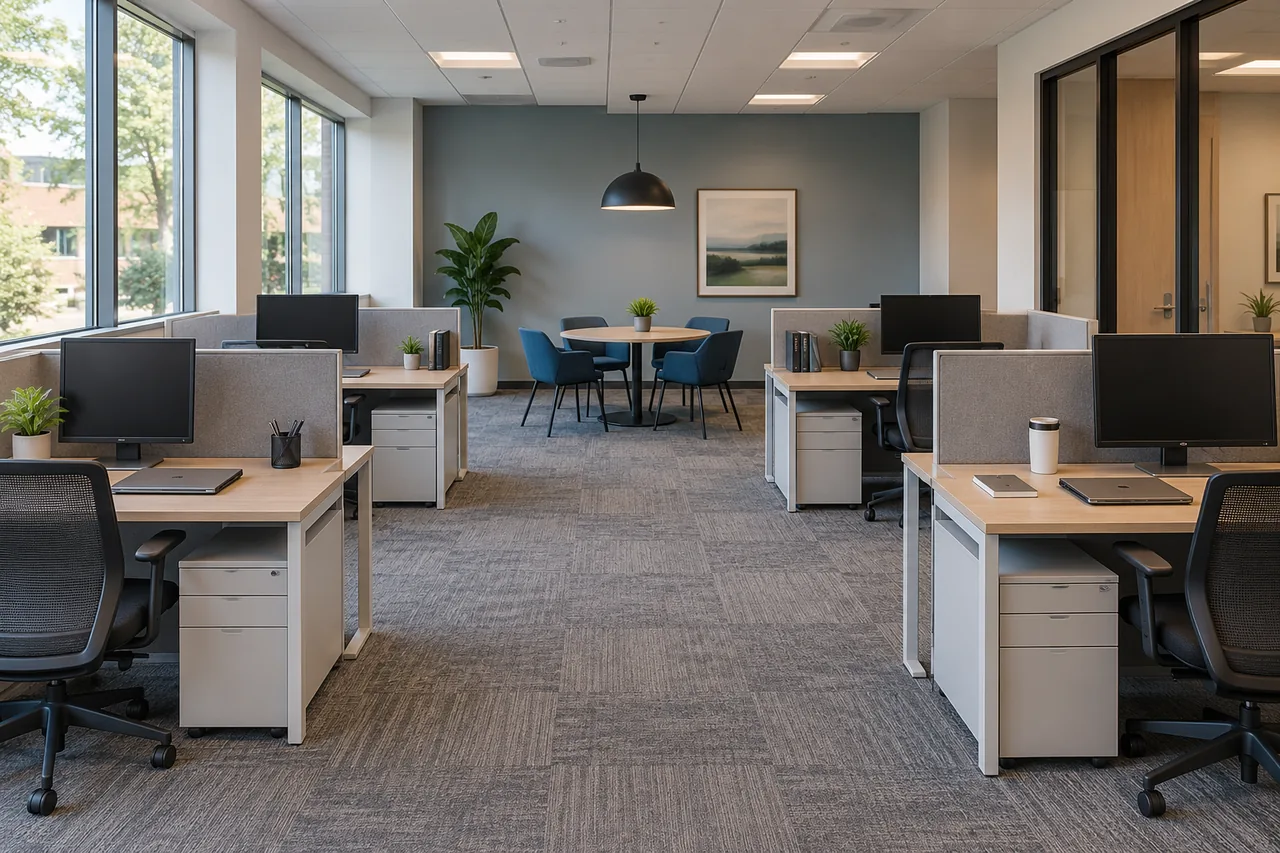
Separate the tenant office from the building scope.
Confirm whether entrances, shared restrooms and corridors belong to the manager or tenant. That boundary changes the scope even at a shared address.
Bring the right service details.
Reception areas, meeting rooms and customer-facing corridors have different demands from private offices. Record which surfaces can be touched and which desks or equipment must remain undisturbed.
Questions to resolve at the building.
Discuss noise, meetings, occupied areas and the time required for floors to be usable. Do not assume after-hours access is available or included.
- Which tasks and areas are included?
- What schedule and access can the building support?
- Who checks the work and authorizes changes?
Keep local requirements connected to the service.
Use the parent service guide for the wider scope, then record requirements specific to this facility. A city page does not establish an office, guaranteed route or accepted job.
Availability needs confirmation.
This local planning page remains research-required and non-indexable. Provider coverage, capability, capacity and verified local operating evidence are required before a live service offer.